Every autumn, the same thing happens. The summer crowds disappear, the beach bars pull in their chairs, and people start messaging us with one question: are you still open?
We are. We teach all year, because in Portugal the surf season does not end when the main season does. So what does surfing on the coast north of Lisbon look like through the year?
The short answer: you can surf here all year
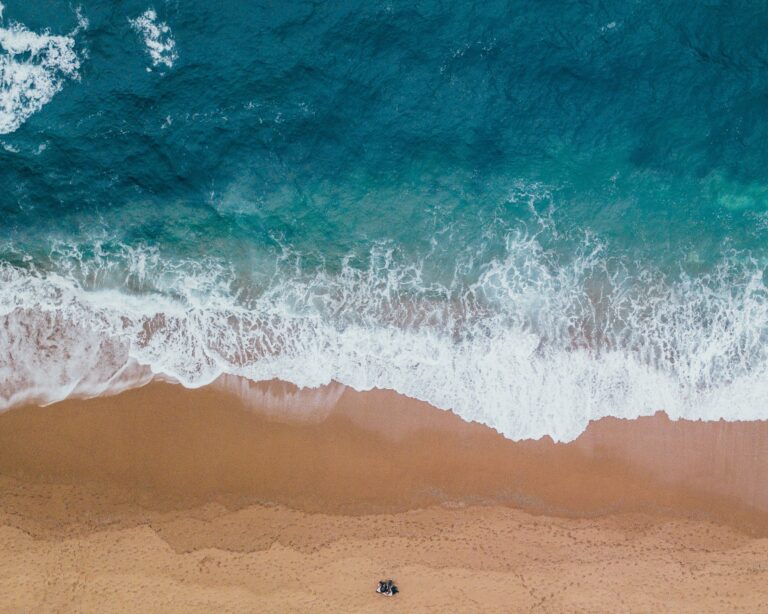
Portugal’s west coast faces the Atlantic, and there are waves every month. Around Santa Cruz near Lisbon, with Peniche and Ericeira close by, there is almost always somewhere that works for a lesson.
Through the year, what changes is how big the waves are, how many people are in the water and how warm the sun is when you come out.
Water temperature
Most people expect the Atlantic to be freezing in winter and quite pleasant in summer. In reality the difference is smaller. The water temperature around here changes by roughly five degrees through the whole year: about 14 to 15°C in the coldest months, around February and March, and about 18 to 20°C at the end of summer, in August and September. It varies from year to year, and on some summer days the wind pulls colder water up from the deep, so August can surprise you.
You notice the difference much more in the sun than in the water. In summer it is at full strength and you come out of the sea into heat. In winter it is softer and the air is cooler, so you feel those few minutes after the session more. On a clear winter morning in Santa Cruz near Lisbon you often have the beach to yourself.
Month by month
| Months | Water (approx.) | Waves | In the water | Good to know |
|---|---|---|---|---|
| January, February | 14 to 15°C | biggest swells of the year | very few people | short days, soft light, plenty of waves to yourself |
| March, April | 14 to 15°C | still powerful, gradually calmer | few people | changeable weather, often beautiful clear days |
| May, June | 16 to 17°C | smaller, friendlier | getting busier | long days, a great time for a first lesson |
| July, August | 18 to 20°C | usually the gentlest | busiest | mornings are best, the wind often picks up in the afternoon |
| September, October | 18 to 20°C | first autumn swells | crowds are leaving | warm water, good waves, empty beaches: a local favourite |
| November, December | 15 to 17°C | stronger, more energy | few people | winter begins, lots of space for your own wave |
Water temperatures are averages. Every year is a little different.
Summer: warm and busy
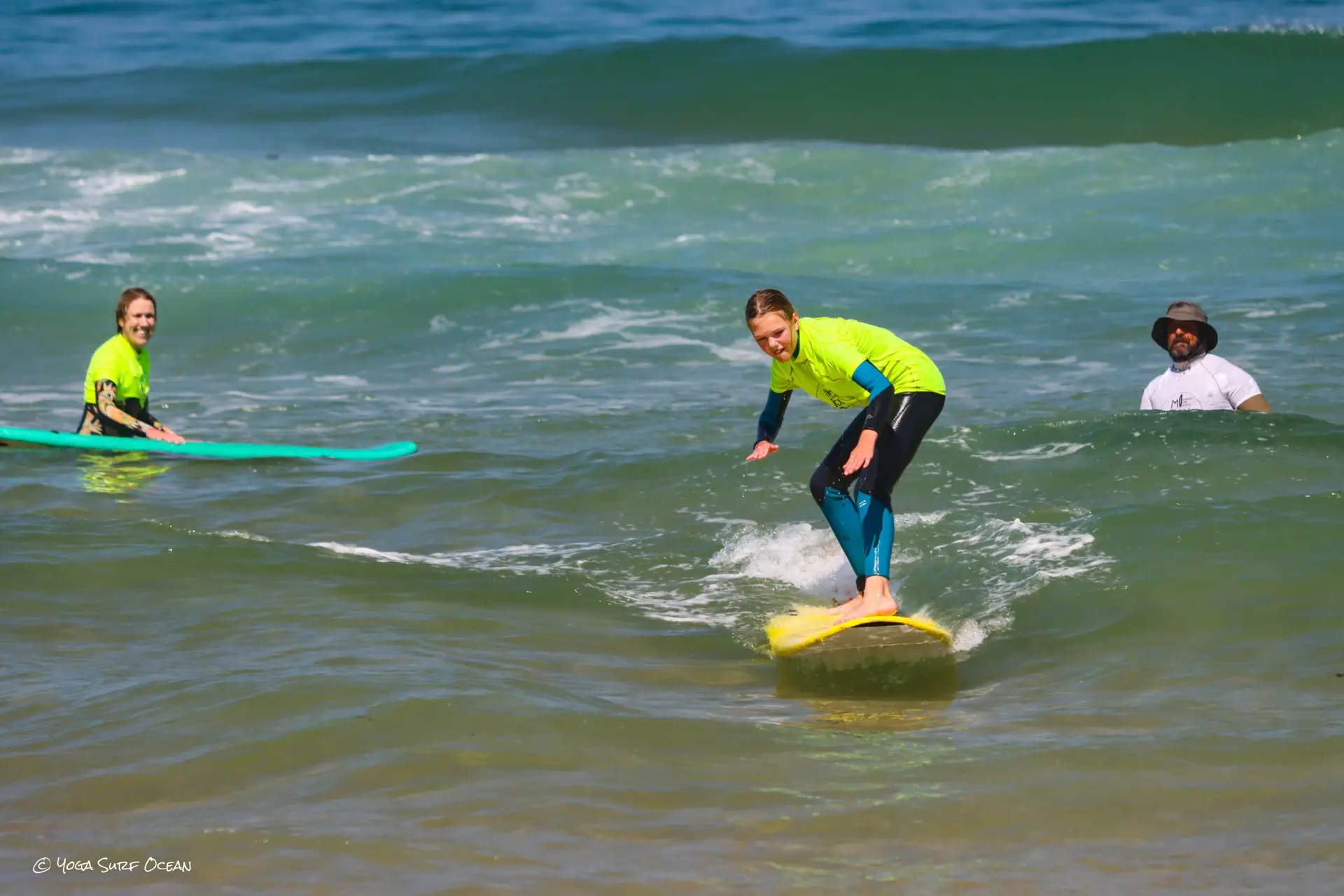
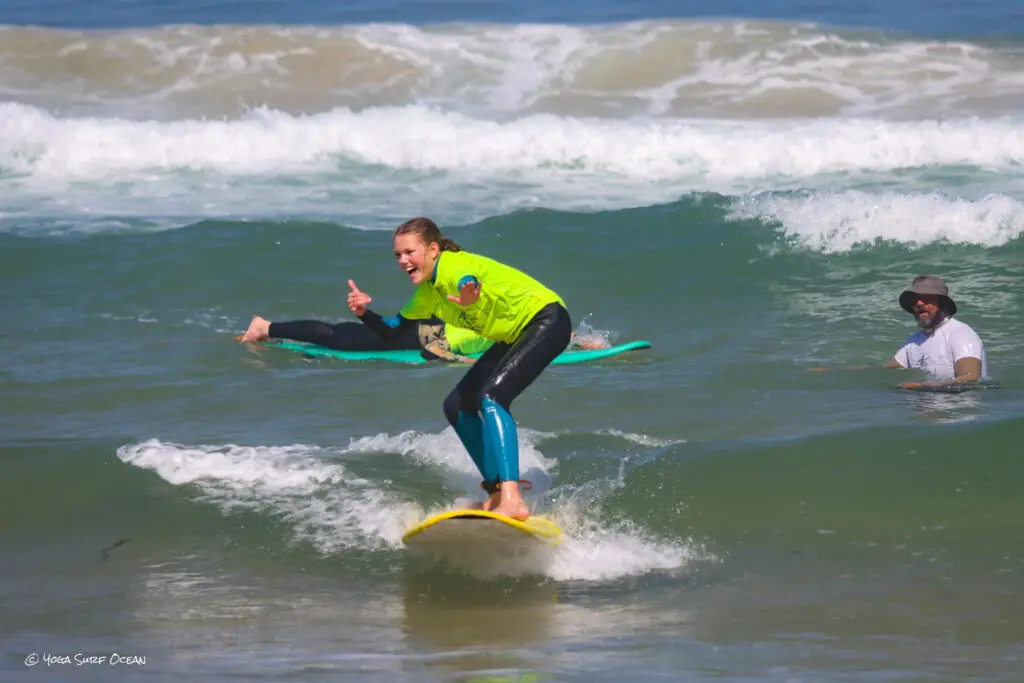
Summer is a good time for a first surf lesson. The ocean is usually calmer, the waves are smaller, and standing in the whitewater in the sun feels good. But in July and August the water is crowded and every wave is a bit of a fight, especially in the afternoon and at the weekend.
Winter: stronger waves, more space in the water
In winter the swells are stronger and the currents more noticeable. On the biggest days, the exposed beaches are really not for beginners. But the whitewater where beginners learn is still there.
The real gift of winter is space. There are far fewer people in the water, it is safer, and you catch more waves.
This is also where local knowledge matters. Santa Cruz sits roughly halfway between Ericeira and Peniche. When the waves in Santa Cruz are big, there are still places where the conditions are just right. Peniche sits on a peninsula and its beaches face in different directions, so one side is often calm even when a big swell is rolling in on the other.
Autumn: the secret season
If you ask surfers who live here, many will tell you September and October are the best months of the year. The water is at its warmest after the whole summer, the first autumn swells arrive, and the crowds have gone. The days are still long enough for a relaxed session.
Intermediate surfers get warm water and the first proper swells, and beginners get space to learn without the summer bustle.
What about wetsuits?
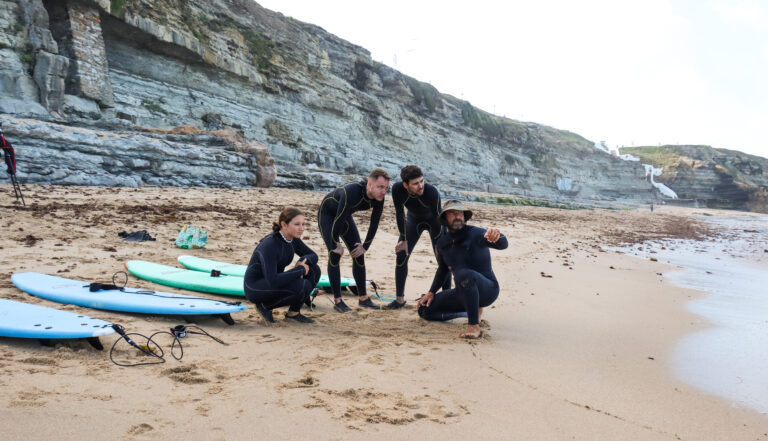
For a lesson you do not need to think about it. The wetsuit and board are included in the lesson, and that is all you need.
If you surf regularly, you will switch between a thinner suit in summer and a warmer one in winter, and a hood is nice to have on the coldest days. Boots are worth it where the wave breaks over a rocky bottom (a reef break), like Ribeira d’Ilhas in Ericeira. Around Santa Cruz the spots are mostly beach breaks, with a sandy bottom and sandy beaches.
When to go on a surf trip?
Any time. Choose summer for your first steps in surfing and long beach days, autumn for warm water and quiet beaches, and winter if you want the ocean almost to yourself and a break from grey skies at home. Spring sits in between, with changeable weather and often clear days.
If you are coming from a cold, grey winter somewhere in Europe, a few days of surf in Portugal is a great idea. Lisbon is a short flight from most European cities, and from the airport it is under an hour to us. Take a few days in January or February and you swap fog for sun, waves and empty beaches.
Quick summary
- You can surf in Portugal all year. We teach in every month.
- The water changes by only about five degrees: roughly 14 to 15°C in late winter, 18 to 20°C at the end of summer.
- Summer is gentle but busy, winter is wilder and emptier, and autumn is the local favourite.
- Wetsuit and board are included in our lessons, whatever the season.
Come and surf with us, in any season
Tell us when you are thinking of coming, and we will tell you what to expect from the ocean at that time of year. You can read more about the lessons on our Surf page, or simply write to us. We usually reply within 24 hours.