Yoga and surf ask your body for many of the same things. You need to breathe when you are stressed, your hips and shoulders have to work together, and your attention has to stay on what is actually happening in front of you.
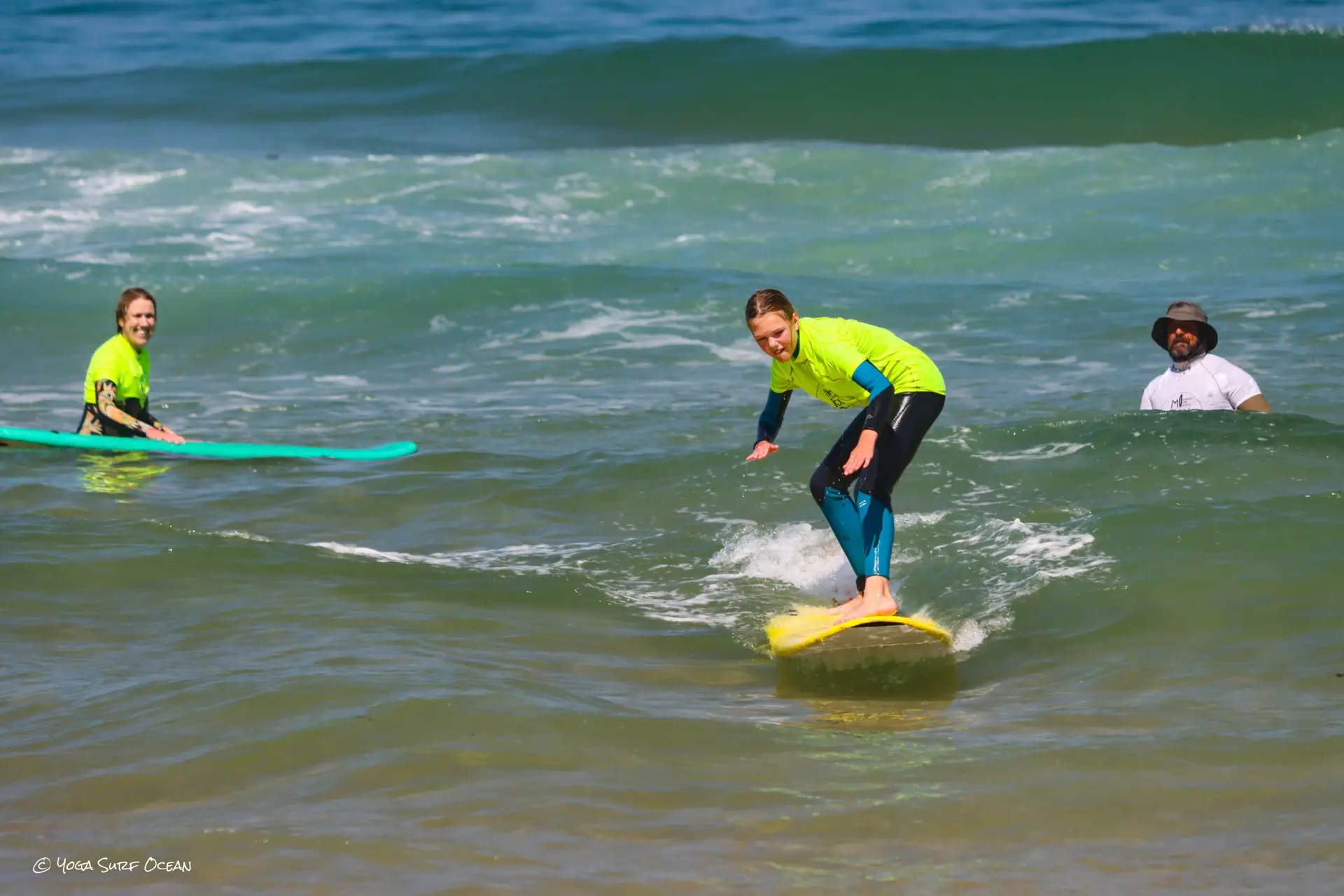
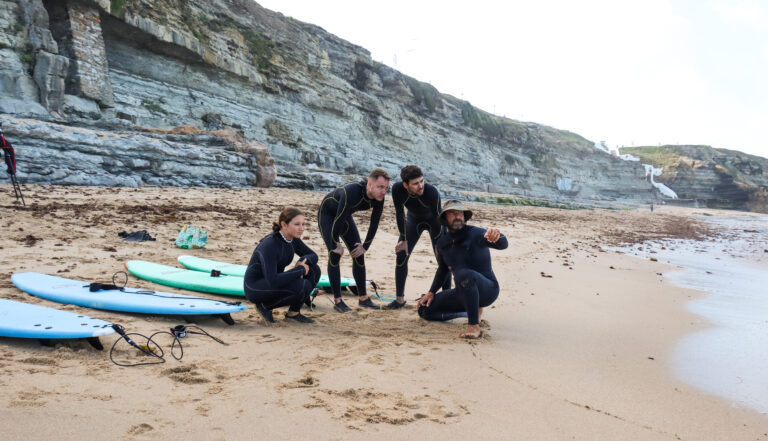
We teach both in Santa Cruz near Lisbon, in small groups close to the beach, so we see the overlap every week. Someone who struggles to catch their breath after being held under benefits from the same long exhale we practise on the mat. Someone who rushes the pop-up usually needs steadier feet.
When the ocean asks you to slow down
Most of surfing happens around the moment you stand up: paddling, duck-diving, reading a set, waiting, missing a wave and trying again. On the mat, a lot of the work is noticing things, like a tight jaw, a lower back doing all the work, or a shallow breath because your body thinks it is in trouble.
Both need your attention. Stop watching the waves, the tide or your own tiredness, and the ocean will remind you; on the mat, your balance will.
Breath you can use in the water
In yoga we spend time noticing the breath: how much effort you are using and where you hold tension you do not need. In the water this matters when you are caught inside, when you need one calm exhale before the next paddle, or when you feel panic coming.
A longer exhale and less bracing can be trained on land, and once they are familiar, they are there when a set lands on your head.
Balance comes from the whole body
Balancing poses teach your centre of gravity, ankles and eyes to work together. Surfing asks the same on a moving surface, where your core, hips and feet keep adjusting to a board that never stays still.
Very flexible or hypermobile people sometimes find this harder, because they can move into a shape without feeling where the support is. That is why we work on stability and control, on the mat and in the surf warm-up.
Strength for paddling
Surfing works the whole body: long paddles, pulling yourself through the water and the small impact of every wave that hits you. Yoga helps with shoulder control, upper back mobility and hip flexors, so you recover faster and move with less strain.
Dealing with stress in the water
Cold water, wind, busy peaks and wipeouts all raise your stress levels. Yoga gives you a few ways to respond: slower breathing, a better sense of your body and a moment to choose what to do next. Surfing has its own rhythm too: paddle, wait, go, rest.
It also helps you notice when you are tense or tired, and when it is time to end the session before you push on too long.
Why we teach both in Santa Cruz near Lisbon
The Atlantic here is often cold and windy. Yoga next to it keeps your body and breath working when the conditions are not ideal.
If you would like to try both, have a look at our surf lessons and yoga classes, or combine them. Groups are small, so the feedback is about you.